Supercharge Your React Native App: A 2025 Guide to Cloud Functions

Tired of slow, bloated React Native apps? Learn how to use Cloud Functions (Firebase & AWS) for backend logic, improve performance, and build scalable apps. Enroll in professional courses at CoderCrafter.in!
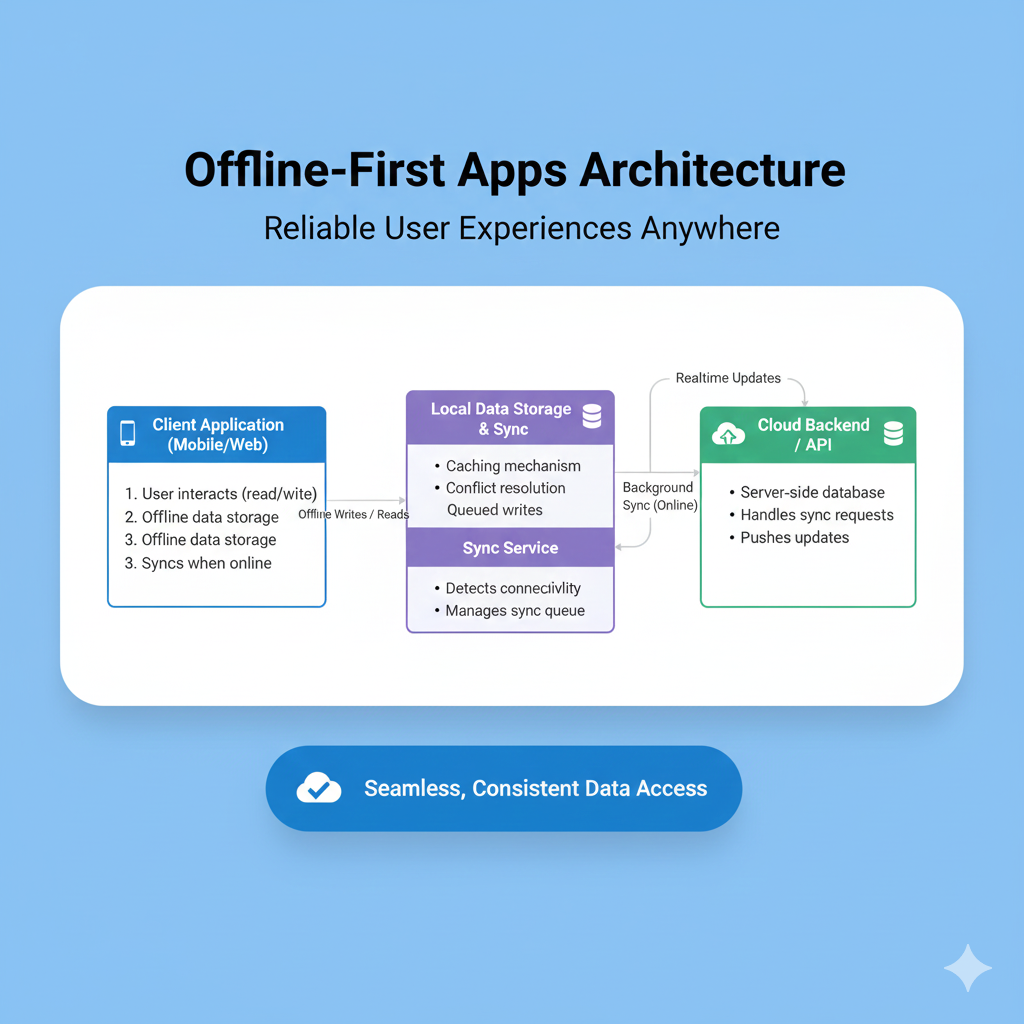
Let's be real. Building a React Native app is awesome. You get that near-native feel, you're writing JavaScript, and life is good. But then, the backend stuff hits you.
You start thinking, "Okay, my app needs to send emails, process payments, analyze images, or maybe just fetch some data that requires a super-secret API key I can't just slap into my app's code."
If you've ever tried to do any of this heavy lifting directly on the user's phone, you know the pain: slow performance, battery drain, and massive security risks. It's a recipe for a one-star review.
So, what's the move? You offload that work to the cloud.
And no, you don't need to rent a whole server, learn DevOps, or manage a complex backend. That's where Cloud Functions come in, and honestly, they're a game-changer.
Alright, What Even Are Cloud Functions?
In the simplest terms, think of a Cloud Function as a little piece of code—a single function—that lives not on your phone, but on a cloud provider's server (like Google, Amazon, or Microsoft).
You only pay for this function when it runs. Not when it's sitting idle. It's serverless (meaning no servers for you to manage), and it's triggered by specific events.
It’s like having a super-efficient remote assistant. Your app (the boss) doesn't do the heavy filing itself; it just says, "Hey, assistant, process this invoice," and the assistant (the cloud function) does the job and sends back the result.
The "Aha!" Moment for React Native Devs
Why is this a perfect match for React Native?
Performance: By moving complex tasks to the cloud, your app becomes snappier. The UI thread isn't blocked by a massive image processing operation or a complex database query.
Security: This is HUGE. You should NEVER store API keys, secrets, or admin credentials in your client-side app bundle. It's like leaving your house key under the doormat. Cloud Functions act as a secure middleman. Your app talks to the function, and the function, which has the secure environment, talks to the other services.
Scalability: Imagine your app goes viral. If all the logic is on the device, it might hold up, but if you're hitting your own weak backend, it'll crash and burn. Cloud providers automatically scale these functions to handle millions of requests. It's their problem, not yours.
Cost-Effectiveness: You start for free. The free tiers for cloud functions are usually more than enough for a growing app, and you only start paying when you get significant traffic.
Let's Get Our Hands Dirty: Real-World Use Cases
Enough theory. Let's talk about how you'd actually use this in your React Native app.
Use Case 1: Sending Transactional Emails
Your app has a "Contact Us" form. Instead of trying to set up an SMTP server on the client (please don't), you trigger a cloud function.
Event: User submits the form in your React Native app.
Trigger: Your app sends the form data to a cloud function (e.g., a Firebase HTTP Trigger).
Action: The cloud function takes that data, uses a service like SendGrid or Resend (with its secure API key), and shoots off the email.
Response: The function sends a "success" message back to your app, and you show a nice "Thank you!" alert to the user.
Use Case 2: Processing Payments Securely
This is the classic example. You never, ever process payments directly on the client.
Event: User hits "Pay Now" in your shopping cart.
Trigger: Your app sends the payment method ID (from Stripe or PayPal SDK) to a cloud function.
Action: The cloud function, which has your secret Stripe API key, securely creates a payment intent and charges the customer.
Response: The function tells your app if the payment was successful or failed, and you update the UI accordingly.
Use Case 3: Heavy Data Processing or AI/ML
Your app lets users upload a profile picture, and you want to create multiple thumbnails, run a content moderation AI to check for inappropriate images, or even analyze the image for objects.
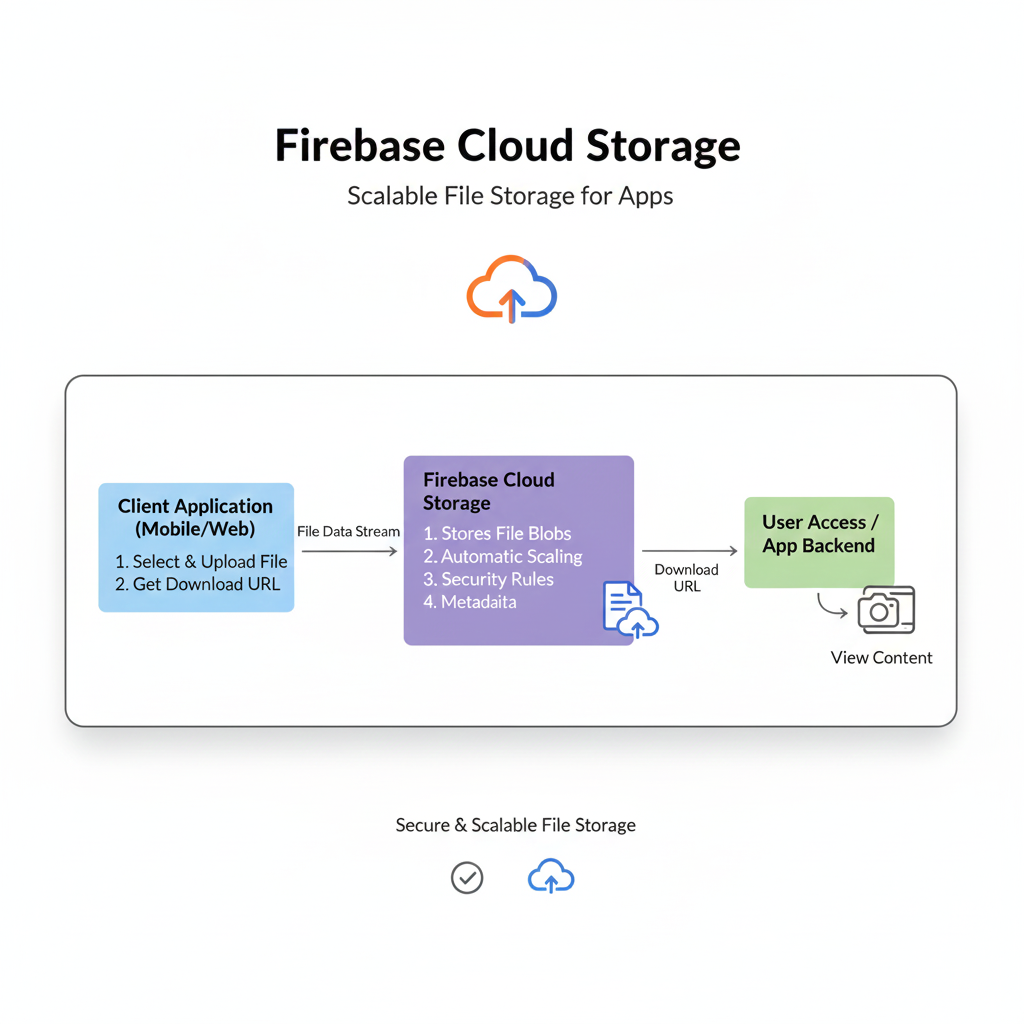
Event: User uploads an image to cloud storage (like Firebase Storage or AWS S3).
Trigger: The storage upload itself automatically triggers a cloud function.
Action: The function fires up, resizes the image into 3 different sizes, uses the Google Cloud Vision API to check for safe content, and stores the results in your database.
Response: Your app is notified that the image is processed and ready to display. The user didn't have to wait for any of this on their phone.
Building a Mini-Project: A "Contact Us" Form with Firebase
Let's walk through a simple example using Firebase, as it's incredibly beginner-friendly and works seamlessly with React Native.
Step 1: Set Up Firebase
Create a Firebase project and install the necessary packages in your React Native app: @react-native-firebase/app and @react-native-firebase/functions.
Step 2: Write Your Cloud Function (Backend Code)
In your Firebase project, you'd write a function like this (using Node.js):
javascript
const functions = require('firebase-functions');
const admin = require('firebase-admin');
const sgMail = require('@sendgrid/mail'); // Example with SendGrid

admin.initializeApp();
sgMail.setApiKey(functions.config().sendgrid.key); // Securely stored key

exports.sendContactEmail = functions.https.onCall(async (data, context) => {
  // Get data from the React Native app
  const { name, email, message } = data;

  // Validate input
  if (!name || !email || !message) {
    throw new functions.https.HttpsError('invalid-argument', 'All fields are required.');
  }

  // Prepare the email
  const msg = {
    to: 'your-email@yourdomain.com',
    from: 'noreply@yourdomain.com', // Your verified SendGrid sender
    subject: `New Contact Form Message from ${name}`,
    text: `You have a new message.\n\nName: ${name}\nEmail: ${email}\nMessage: ${message}`,
  };

  try {
    // Send the email
    await sgMail.send(msg);
    return { success: true, message: 'Email sent successfully!' };
  } catch (error) {
    console.error('Error sending email:', error);
    throw new functions.https.HttpsError('internal', 'Failed to send email.');
  }
});
You deploy this function using the Firebase CLI with firebase deploy --only functions.
Step 3: Call the Function from Your React Native App (Frontend Code)
In your React Native component, you'd call this function like so:
javascript
import React, { useState } from 'react';
import { View, TextInput, Button, Alert } from 'react-native';
import functions from '@react-native-firebase/functions';

const ContactScreen = () => {
  const [name, setName] = useState('');
  const [email, setEmail] = useState('');
  const [message, setMessage] = useState('');
  const [loading, setLoading] = useState(false);

  const handleSubmit = async () => {
    if (!name || !email || !message) {
      Alert.alert('Error', 'Please fill all fields.');
      return;
    }

    setLoading(true);
    try {
      const sendEmail = functions().httpsCallable('sendContactEmail');
      const result = await sendEmail({ name, email, message });

      Alert.alert('Success', result.data.message);
      setName('');
      setEmail('');
      setMessage('');
    } catch (error) {
      Alert.alert('Error', error.message);
    } finally {
      setLoading(false);
    }
  };

  return (
    <View>
      <TextInput placeholder="Name" value={name} onChangeText={setName} />
      <TextInput placeholder="Email" value={email} onChangeText={setEmail} keyboardType="email-address" />
      <TextInput placeholder="Message" value={message} onChangeText={setMessage} multiline />
      <Button title={loading ? "Sending..." : "Send"} onPress={handleSubmit} disabled={loading} />
    </View>
  );
};

export default ContactScreen;
Boom! You now have a secure, serverless backend for your contact form.
Best Practices You Don't Want to Skip
Keep Functions Lightweight: They are designed for short-lived tasks. If you have a process that takes more than a few minutes, consider a different cloud service.
Handle Errors Gracefully: Always use try/catch blocks in your functions and return meaningful errors to your React Native app.
Security Rules: Use Firebase Auth in your functions to validate that the user is who they say they are before performing sensitive operations.
Manage Dependencies: Keep your function's
package.jsonclean. Unnecessary packages increase cold start times.Set Timeouts and Memory Limits: Configure your function's timeout and memory based on its needs to optimize cost and performance.
FAQs: Quick Fire Round
Q: Are Cloud Functions expensive?
A: For most startups and growing apps, no. The free tiers are very generous. You only pay per invocation and for the compute time, which is fractions of a cent.
Q: Firebase vs. AWS Lambda?
A: Firebase Functions (which are actually Google Cloud Functions under the hood) are easier to start with, especially for mobile devs. AWS Lambda is more powerful and configurable but has a steeper learning curve. Start with Firebase.
Q: What about "cold starts"?
A: This is the delay when a function hasn't been used in a while and needs to "spin up." It's a real thing, but for most user-facing tasks, it's barely noticeable. You can mitigate it by keeping functions warm or using higher memory settings.
Q: Can I use them with my existing REST API?
A: Absolutely. You can write cloud functions that act as specific endpoints for your React Native app, creating a fully serverless backend.
Conclusion: Stop Overcomplicating Your Backend
Cloud Functions fundamentally change how we build mobile apps. They let you, the frontend-focused developer, add powerful, secure, and scalable backend features without becoming a full-blown backend engineer.
It’s about working smarter, not harder. You focus on building an incredible user experience in React Native, and let the cloud handle the grunt work.
This is the kind of modern, industry-standard architecture that separates hobby projects from professional applications. To learn professional software development courses that dive deep into these concepts, including Python Programming, Full Stack Development, and the MERN Stack, visit and enroll today at codercrafter.in. We'll guide you from the fundamentals to building complex, real-world applications.
So, what are you waiting for? Pick a use case from your current project and try replacing it with a cloud function. You'll be amazed at the result.