Apollo Client Setup 2025: Complete Guide for GraphQL State Management
tep-by-step Apollo Client setup guide with code examples, best practices, and real-world use cases. Learn GraphQL state management like a pro. Enroll in full-stack courses at codercrafter.in.
Alright, let's talk about something that's genuinely changed how we build web applications: Apollo Client. If you're working with GraphQL (and you should be, it's fantastic), you've probably heard this name thrown around. But what exactly is it, and why is everyone from startups to tech giants obsessing over it?
Let's break it down—no fluff, just straight-up practical knowledge you can actually use.
What Even Is Apollo Client?
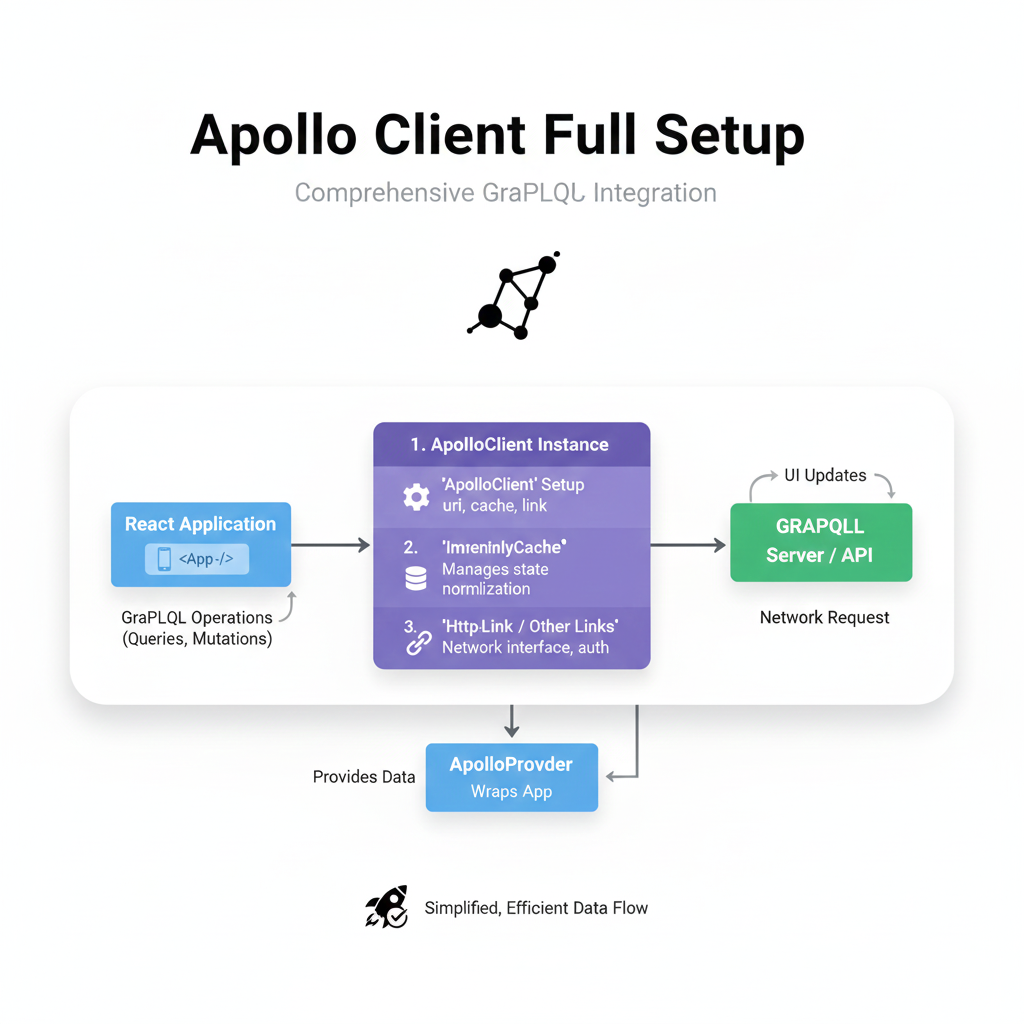
In simple terms, Apollo Client is a comprehensive state management library for JavaScript that enables you to manage both local and remote data with GraphQL. Think of it as the bridge between your slick React/Vue/Angular frontend and your GraphQL API. But it's so much more than just a fetching library—it's a full-blown data layer for your entire application.
Remember the old days of juggling between Redux for state, Axios for API calls, and a dozen other libraries for caching and optimization? Apollo Client says, "Nah, I got this." It handles caching, state synchronization, error handling, loading states, and even optimistic UI updates out of the box.
Why Should You Care? The Real-World Juice
Let me paint a picture: You're building a social media dashboard. Users need to see their feed, notifications, messages, and profile info—all updating in real-time. With traditional REST, you'd make separate calls for each endpoint, handle loading states manually, and pray your cache doesn't get stale.
With Apollo Client and GraphQL? One query gets exactly the data you need. The built-in cache makes your app stupid fast (like, instant-load-fast). Real-time updates with subscriptions? Done. Offline support? Possible. The developer experience is so smooth it feels like cheating.
Getting Your Hands Dirty: The Full Setup Guide
Enough theory—let's build. Here's the modern, professional setup for a React application.
Step 1: Installation
First, you need the core packages. We're using the latest version (Apollo Client 3.x) because it's where all the cool features live.
bash
npm install @apollo/client graphqlStep 2: The Client Setup
Create a file named apolloClient.js:
javascript
import { ApolloClient, InMemoryCache, createHttpLink } from '@apollo/client';
import { setContext } from '@apollo/client/link/context';

const httpLink = createHttpLink({
  uri: 'https://your-graphql-api.com/graphql', // Your GraphQL endpoint
});

const authLink = setContext((_, { headers }) => {
  // Get your authentication token (from localStorage, context, wherever)
  const token = localStorage.getItem('authToken');

  return {
    headers: {
      ...headers,
      authorization: token ? `Bearer ${token}` : "",
    }
  };
});

const client = new ApolloClient({
  link: authLink.concat(httpLink),
  cache: new InMemoryCache({
    typePolicies: {
      Query: {
        fields: {
          // Define your custom cache policies here
          posts: {
            merge(existing = [], incoming) {
              return incoming; // Custom merge logic
            },
          },
        },
      },
    },
  }),
  defaultOptions: {
    watchQuery: {
      fetchPolicy: 'cache-and-network', // My personal favorite
      errorPolicy: 'all',
    },
  },
});

export default client;
Step 3: Wrapping Your App
In your main App.js or index.js:
javascript
import React from 'react';
import ReactDOM from 'react-dom';
import { ApolloProvider } from '@apollo/client';
import client from './apolloClient';
import App from './App';

ReactDOM.render(
  <ApolloProvider client={client}>
    <App />
  </ApolloProvider>,
  document.getElementById('root')
);
Step 4: Your First Query (Hooks Style!)
Apollo Client's React hooks are clean and intuitive. Here's a component that fetches data:
javascript
import { useQuery, gql } from '@apollo/client';

const GET_POSTS = gql`
  query GetPosts($limit: Int!) {
    posts(limit: $limit) {
      id
      title
      body
      author {
        name
        avatar
      }
      likes
    }
  }
`;

function PostList() {
  const { loading, error, data, refetch } = useQuery(GET_POSTS, {
    variables: { limit: 10 },
    notifyOnNetworkStatusChange: true, // Great for refetching states
  });

  if (loading) return <p>Loading fresh content...</p>;
  if (error) return <p>Oops! Something went wrong: {error.message}</p>;

  return (
    <div>
      <button onClick={() => refetch()}>Refresh Posts</button>
      {data.posts.map((post) => (
        <article key={post.id}>
          <h3>{post.title}</h3>
          <p>{post.body}</p>
          <small>By {post.author.name}</small>
        </article>
      ))}
    </div>
  );
}
Next-Level Features That'll Blow Your Mind
1. The Cache is Your Secret Weapon
Apollo's normalized cache is genius. It automatically caches your queries and updates components everywhere when data changes. Saw a notification count update everywhere instantly? That's Apollo magic.
2. Optimistic UI for That "Native App" Feel
Want your UI to update instantly before the server responds? Perfect for likes, comments, or any quick action:
javascript
const [addComment] = useMutation(ADD_COMMENT_MUTATION, {
  optimisticResponse: {
    addComment: {
      id: 'temp-id',
      text: newCommentText,
      author: currentUser,
      __typename: 'Comment',
    },
  },
  update(cache, { data: { addComment } }) {
    // Update cache immediately
    cache.modify({
      fields: {
        comments(existingComments = []) {
          return [addComment, ...existingComments];
        },
      },
    });
  },
});
3. Real-Time with Subscriptions
Live chat, notifications, stock tickers—GraphQL subscriptions have you covered:
javascript
import { split, HttpLink } from '@apollo/client';
import { getMainDefinition } from '@apollo/client/utilities';
import { WebSocketLink } from '@apollo/client/link/ws';

const wsLink = new WebSocketLink({
  uri: 'wss://your-api/graphql',
  options: {
    reconnect: true,
  },
});

const splitLink = split(
  ({ query }) => {
    const definition = getMainDefinition(query);
    return (
      definition.kind === 'OperationDefinition' &&
      definition.operation === 'subscription'
    );
  },
  wsLink,
  httpLink,
);
Best Practices From Production
Use TypeScript - Seriously. Apollo Client + TypeScript + GraphQL Code Generator is a match made in heaven. You get full type safety from backend to frontend.
Custom Hooks Are King - Wrap your queries and mutations in custom hooks:
javascript
export const useGetUserProfile = (userId) => {
  return useQuery(GET_USER_PROFILE, {
    variables: { userId },
    skip: !userId, // Don't run if no userId
  });
};
Pagination Done Right - Use Apollo's
fetchMorewith cursor-based pagination. It's smooth and keeps your cache organized.Error Handling That Doesn't Suck - Create error links and global handlers. Users should never see raw GraphQL errors.
Performance Tips:
Use
useMemofor expensive queriesImplement
useLazyQueryfor on-demand fetchingSet appropriate
fetchPoliciesper componentCache redirects for instant navigation
Common FAQs (Stuff You'll Actually Google)
Q: Apollo Client vs. Redux/React Query?
A: If you're using GraphQL, Apollo is your all-in-one solution. Redux is overkill for most apps now. React Query is great for REST, but Apollo is purpose-built for GraphQL.
Q: How's the bundle size?
A: Not tiny (~30KB gzipped), but you get a complete data layer. For smaller projects, consider urql or plain fetch.
Q: Can I use it with Next.js?
A: Absolutely! Use next-with-apollo or Apollo's own SSR support. It plays nicely with static generation and server-side rendering.
Q: How do I handle authentication?
A: Use the auth link (like in our setup) for tokens. For social logins, handle the token exchange on your backend.
Q: Is the cache persistent?
A: Not by default, but use apollo3-cache-persist for localStorage/sessionStorage persistence.
The Verdict
Apollo Client isn't just another library—it's a paradigm shift in how we think about frontend data. The initial setup might seem like a bit more work, but the payoff in developer productivity, app performance, and user experience is absolutely worth it.
The modern web demands real-time, responsive applications, and Apollo Client gives you the tools to build exactly that without losing your sanity.
Ready to Level Up Your Skills?
Mastering tools like Apollo Client separates hobbyists from professional developers. The patterns you learn—caching strategies, state synchronization, performance optimization—apply across modern frontend development.
To learn professional software development courses such as Python Programming, Full Stack Development, and MERN Stack with real-world projects and industry best practices, visit and enroll today at codercrafter.in. Our curriculum includes deep dives into GraphQL, Apollo Client, and building production-ready applications that actually get you hired.
Speaking of building useful tools, check out our free CMYK to RGB converter at codercrafter.in—a practical example of clean, functional web development.
Got Apollo Client questions or war stories? Drop them in the comments