Dive into our deep dive on Realm DB in 2025. We cover its modern use cases, pros/cons, best practices, and if it's still the go-to database for reactive, offline-first apps. Plus, see how to master it.
Alright, let’s talk databases. Not the heavy-duty, server-room kind, but the one that lives right on your user's phone, making your app feel like magic. You know the feeling—instant searches, silky-smooth lists that update in real-time, and everything working perfectly even when you’re in a subway tunnel with zero bars. That’s the promise of Realm.
But hey, it’s 2025. We’ve got a ton of options. SQLite has been the old reliable, and new wrappers pop up every day. So, is Realm still the cool kid on the block, or has it been left behind? Let’s break it down, no jargon, just straight talk.
What Exactly is Realm? Let’s Redefine It.
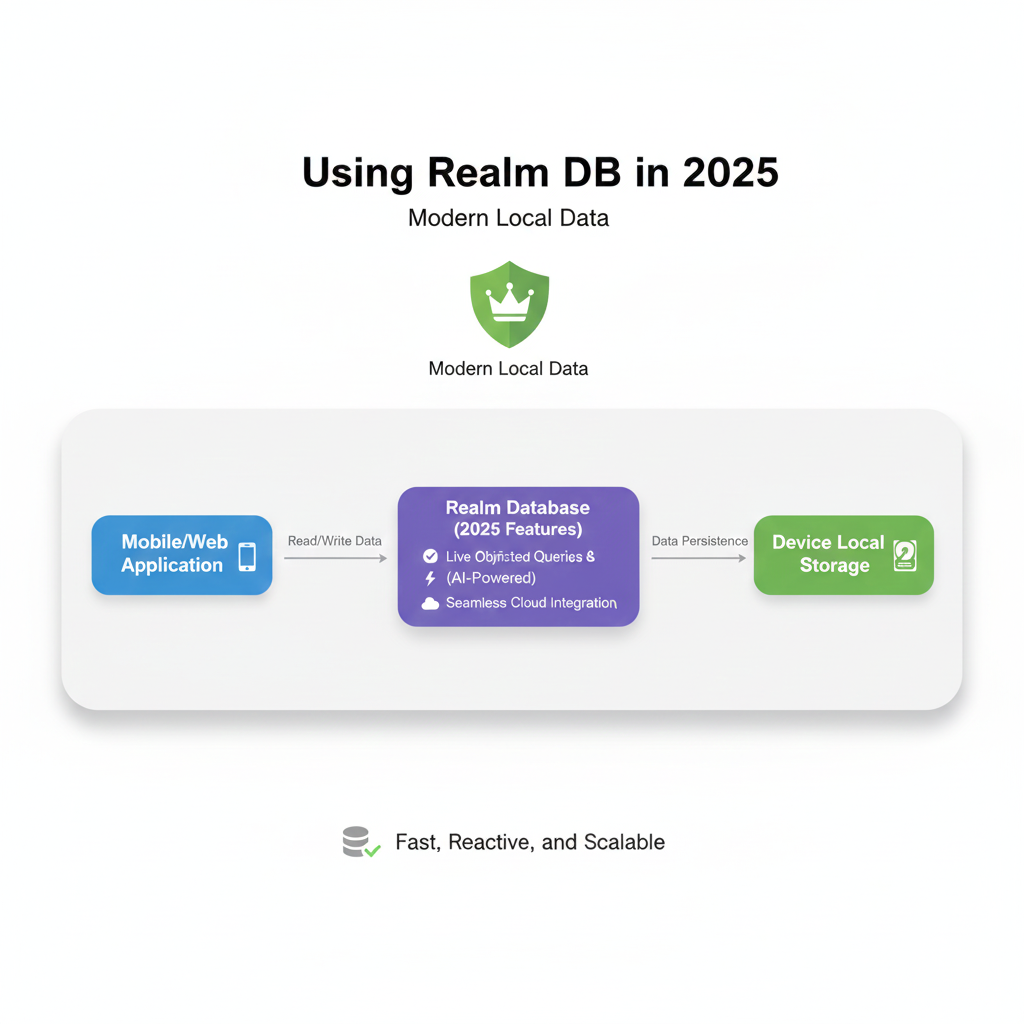
Forget what you read in 2018. In 2025, Realm is a real-time, object-oriented database built from the ground up for modern mobile and edge applications. It’s not a wrapper over SQLite; it’s its own engine. Think of it like this: your app’s data objects aren’t just stored, they live in memory as live, reactive objects.
The biggest "aha!" moment with Realm is the "live objects" concept. You don’t fetch data, update a variable, and then push changes. You directly mutate the object, and those changes are automatically persisted and instantly visible to every other part of your app listening to that data. It’s like having a super-powered global state manager that’s also your permanent storage.
Why Realm in 2025 Feels So Right
Offline-First is Non-Negotiable: Users expect apps to work, anytime, anywhere. Realm’s primary database is on the device, making offline functionality the default, not an afterthought.
Real-Time Reactions are Standard: Whether it’s a collaborative to-do list, a live score update, or a chat message, users want to see changes as they happen. Realm’s change listeners make this trivial.
Performance That You Can Feel: By using zero-copy architecture (it doesn’t create multiple in-memory copies of your data), it’s stupidly fast for read-heavy, UI-driven operations. Scrolling through a list of 10,000 items? Smooth.
Developer Experience (DX) is Killer: You work with native objects. In JavaScript/React Native, it’s plain classes and objects. In Kotlin, it’s data classes. In Swift, it’s Swift objects. No messy SQL strings, no ORM mapping headaches.
Real-World Use Cases: Where Realm Absolutely Shines
Social & Messaging Apps: Think about a WhatsApp-like chat. Local message storage, instantaneous UI updates when a new message arrives, and seamless syncing when back online. Realm + Realm Sync is built for this.
Fitness & Health Trackers: The app collects sensor data continuously (steps, heart rate), needs to store it efficiently offline, and provide real-time charts. Realm handles the high write/read frequency effortlessly.
E-Commerce Mobile Apps: Fast, filterable product catalogs stored locally, a responsive shopping cart that persists between app restarts, and quick order history browsing.
IOT & Edge Computing: For apps controlling smart devices, where low latency is critical, having a local Realm database reacting to device state changes is a game-changer.
Let’s Get Our Hands Dirty: A Quick 2025 Example (React Native)
Imagine a simple task app. Here’s how intuitive it is:
javascript
// Define your model - it's just a JS class
class Task extends Realm.Object {
  static schema = {
    name: 'Task',
    primaryKey: '_id',
    properties: {
      _id: 'objectId',
      text: 'string',
      isComplete: { type: 'bool', default: false },
      createdAt: 'date',
    },
  };
}

// Open a local Realm
const realm = await Realm.open({
  schema: [Task],
});

// Write data - wrap in a transaction
realm.write(() => {
  realm.create('Task', {
    _id: new Realm.BSON.ObjectId(),
    text: 'Learn Realm in 2025!',
    createdAt: new Date(),
  });
});

// Query data - it's just filtered objects
const pendingTasks = realm.objects('Task').filtered('isComplete == false');

// Listen for changes in REAL-TIME
pendingTasks.addListener((tasks, changes) => {
  // Your UI updates here automatically
  console.log('Tasks updated! New count:', tasks.length);
});
See? No await db.run() or UPDATE table SET. You just work with your data.
Best Practices for 2025 and Beyond
Keep Realms Focused: Don’t put your entire app’s data in one giant Realm. Use separate Realms for distinct modules (e.g.,
user.realm,catalog.realm).Leverage Atlas Device Sync (If You Need It): For cloud sync, Realm’s built-in sync to MongoDB Atlas is its killer feature. It handles conflict resolution, network resiliency, and incremental updates. It’s a paid service, but it saves months of dev work.
Mind the Migration: Schema changes need migration logic. Plan your models carefully and always write migration blocks. In 2025, their flexible sync mode has made this much easier.
Clean Up Listeners: Always remove listeners in
useEffectcleanup orcomponentWillUnmountto prevent memory leaks.Use the Reactive Architecture: Design your UI components to react to Realm data changes. With hooks like
useQueryanduseObject(from@realm/react), it’s a breeze.
FAQs: The Questions You’re Actually Asking
Q: Realm vs. SQLite (via WatermelonDB or TypeORM) in 2025?
A: It’s about philosophy. SQLite is a battle-tested relational file format. Realm is a live object store. If your app is highly reactive and you want the simplest path from data to UI, Realm wins. For complex relational queries or if you’re deeply tied to SQL, SQLite might be better.
Q: Is Realm Free?
A: The core, local-only Realm database is 100% free and open-source. The premium product is Atlas Device Sync for cloud synchronization, which has a generous free tier and paid plans for scale.
Q: Can I use it with Flutter?
A: Absolutely! The realm Dart package is officially supported and is fantastic. The same object-oriented principles apply.
Q: What about web support?
A: This was a weak spot, but it’s improved. Realm for Web is available, but it’s often more niche. For mainstream web apps, traditional backend + frontend DBs might be more suitable.
Q: Is the learning curve steep?
A: It’s the opposite of steep for basic use. The hardest part is unlearning "fetch-update-push" patterns. Once you embrace the "live objects" mindset, it becomes incredibly intuitive.
Conclusion: So, Should You Build With Realm in 2025?
If you’re building a mobile-first or edge-first application (React Native, Flutter, native iOS/Android) that demands a reactive UI, offline capability, and real-time sync, then Realm isn’t just an option—it’s arguably the best-in-class solution. It makes hard things simple and fast.
The integration with the modern MongoDB Atlas ecosystem (Device Sync, Triggers, Functions) also future-proofs your app as it scales from a local-only prototype to a globally synced production system.
However, if your project is a simple CRUD app with no offline needs, or a large-scale web application, the benefits might not outweigh introducing a new database paradigm.
Mastering tools like Realm DB is what separates hobbyist coders from professional software engineers who can architect robust, user-delighting applications. The concepts of reactive data flows and offline-first design are industry standards now.
To learn professional software development courses such as Python Programming, Full Stack Development, and MERN Stack, where you build real-world apps with databases like Realm, visit and enroll today at codercrafter.in. We don’t just teach syntax; we teach you how to think like a developer and choose the right tool for the job.
Final Verdict: Realm in 2025 is mature, powerful, and more relevant than ever for the right use case. Give it a try for your next mobile project. You might just wonder how you ever built apps without it.