React Native & AI: The Future of Smart Mobile Apps
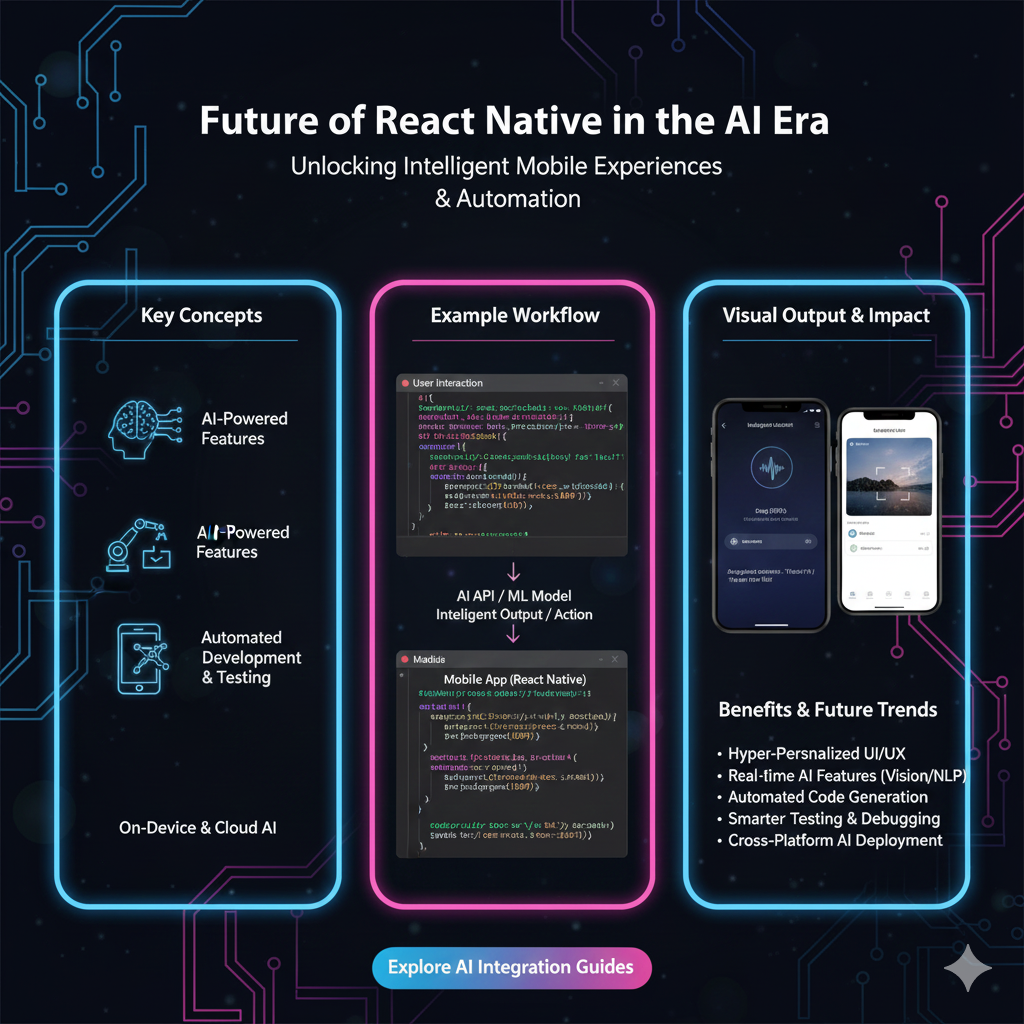
Is React Native ready for the AI era? Discover how AI is supercharging cross-platform apps, explore real-world use cases, best practices, and future trends. Level up your skills with CoderCrafter's courses!
Let's be real. The app landscape is changing faster than a TikTok trend. Users don't just want apps that work; they want apps that get them. They want personalization, smart features, and an experience that feels almost psychic. That’s where Artificial Intelligence (AI) and Machine Learning (ML) come in.
But here's the million-dollar question for developers and businesses: How do you build these AI-powered smart apps without having to code everything twice (once for iOS and once for Android)?
Enter React Native.
Yeah, you heard that right. The same framework that brought us "learn once, write anywhere" for basic UIs is now stepping up its game in a big way. So, grab your favorite cup of coffee, and let's deep-dive into the future of React Native in this wild AI era.
First, A Quick Reality Check: What Exactly is React Native?
In simple terms, React Native is a popular open-source framework, created by Meta (formerly Facebook), that lets you build mobile apps using JavaScript and React. Instead of writing separate code in Swift (for iOS) and Kotlin/Java (for Android), you write most of your logic in JavaScript, and React Native renders it using native components. The result? A truly native look-and-feel with the development speed of the web.
It’s been the go-to for companies like Instagram, Shopify, Discord, and Pinterest to launch their apps quickly and efficiently.
The AI Gold Rush: Why Now?
AI has moved from being a sci-fi buzzword to a core utility. We're talking about:
Computer Vision: Letting your app "see" and understand images and videos.
Natural Language Processing (NLP): Enabling chatbots, translators, and sentiment analysis.
Predictive Analytics: Forecasting user behavior, from shopping habits to content preferences.
Generative AI: Creating text, code, or images on the fly within your app.
Integrating these capabilities is no longer a "nice-to-have"; it's a competitive edge. And the best part? You don't need to be a PhD in Data Science to use them. Thanks to cloud APIs and pre-trained models, AI is becoming democratized.
The Perfect Match? How React Native is Embracing AI
You might think, "But React Native is just for the UI, right? AI is heavy lifting." And you're not entirely wrong. The core AI processing often happens elsewhere. But React Native acts as the perfect bridge, the sleek, user-friendly interface that connects users to powerful AI brains.
Here’s how it’s happening:
1. The Power of Native Modules & TurboModules
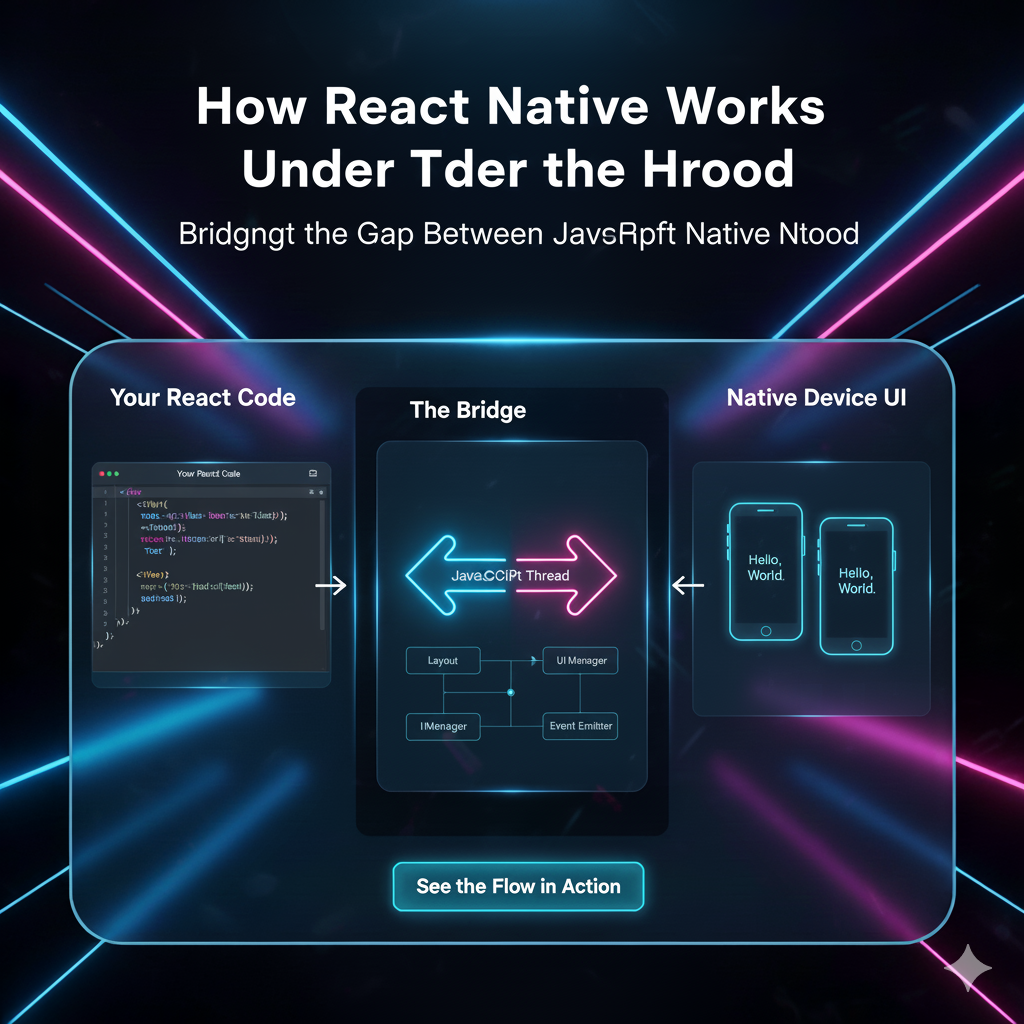
This is the secret sauce. While React Native handles the JavaScript side, it can seamlessly communicate with native code (Java/Kotlin for Android, Objective-C/Swift for iOS). This means you can take a powerful, platform-specific AI library and create a React Native "wrapper" around it.
Example: Want to use Apple's Core ML on iOS and Google's ML Kit on Android for face detection? You can create a unified JavaScript interface (FaceDetector.detect(imageUri)) that internally uses the respective native SDK. The React Native part doesn't care about the underlying complexity; it just gets the result and displays it.
With the newer TurboModules (part of the New Architecture), this communication becomes even faster and more efficient, which is crucial for real-time AI tasks like live video processing.
2. The Booming Ecosystem of AI-First Libraries
The community has been absolutely killing it. You don't always need to build your own native modules. There are robust, well-maintained libraries that do the heavy lifting for you.
React Native Vision Camera: This isn't just a camera library; it's a powerhouse. It can directly feed camera frames to a TensorFlow Lite model for real-time object detection, barcode scanning, or pose estimation. Imagine building a fitness app that corrects your form in real-time!
@invertase/ml-kit-react-native: A fantastic wrapper for Google's ML Kit, giving you access to text recognition, image labeling, face detection, and more, right out of the box.
React Native Hugging Face Transformers: This allows you to run lightweight, pre-trained models from the Hugging Face hub directly on the device, enabling offline translation, text generation, or question-answering.
3. The Cloud-Based API Model (The Most Common Approach)
Often, the heaviest AI models are just too big to run on a phone. That's where cloud APIs from giants like Google Cloud AI, AWS, and Microsoft Azure come in. Your React Native app simply captures the data (an image, a voice note, a query), sends it to the cloud API, and receives the processed result.
Real-World Use Case: A social media app built with React Native lets users upload a photo. The app sends the photo to a cloud API for content moderation (to filter out NSFW content) and automatic alt-text generation (for accessibility). All this AI magic happens behind the scenes, with React Native providing a smooth user interface.
Real-World Use Cases That Are Absolutely Fire 🔥
Let's move beyond theory. Here’s how AI in React Native is solving real problems:
E-commerce & Retail: An app that uses a phone's camera to visualize how a piece of furniture would look in your room (Augmented Reality + AI) or recommends products based on a photo you took.
Healthcare: A symptom checker app where you describe your symptoms via text or voice, and an NLP model helps triage and suggest possible conditions or next steps.
Finance: A banking app that uses optical character recognition (OCR) to let you scan your cheque for easy deposits, all within the React Native interface.
Social Media & Content: Auto-generating captions for images, creating smart filters that interact with facial features, or curating a personalized news feed based on your reading habits.
Accessibility: Building apps that can describe scenes for the visually impaired (using image-to-speech) or transcribe speech to text for the hearing impaired in real-time.
Best Practices for Building AI-Powered React Native Apps
Jumping in headfirst is tempting, but a little strategy goes a long way.
Start with the Cloud for Prototyping: For your MVP, leverage cloud APIs. They are scalable, accurate, and save you from the complexity of managing models. You can always move some functionality on-device later for specific needs.
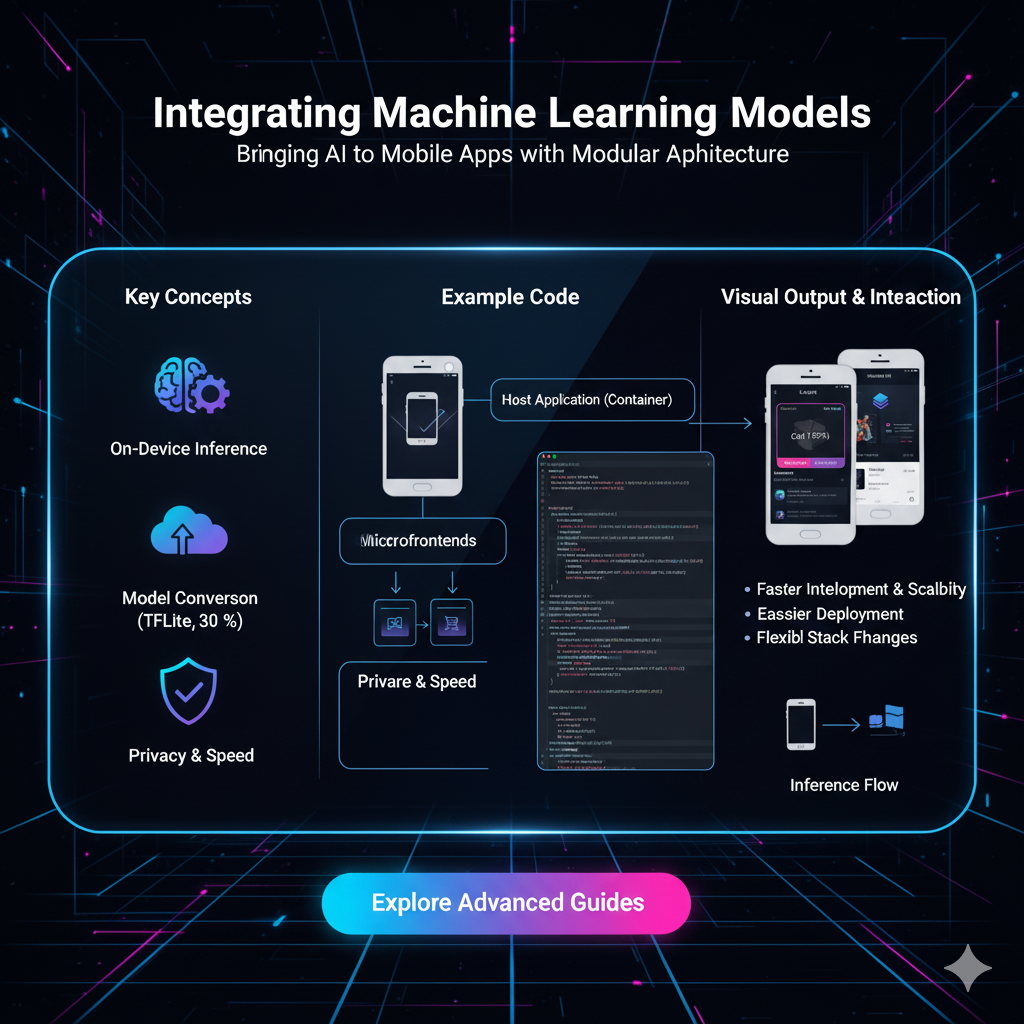
Prioritize On-Device AI for Privacy & Speed: If you're handling sensitive data (like health info) or need features to work offline (like a translator in a remote area), invest in integrating on-device models using TensorFlow Lite or PyTorch Mobile.
Handle the "Loading" State Beautifully: AI calls can take a second. Don't leave your users with a frozen screen. Use sleek loaders, skeletons, or progressive disclosure to make the wait feel seamless.
Optimize Your Bundle Size: On-device models can be large. Be smart about lazy loading them or downloading them after the app is installed to keep the initial download small.
Test, Test, and Test Again: AI models can be biased or behave unpredictably. Test your features with a wide range of data inputs to ensure robustness and fairness.
FAQs: Your Burning Questions, Answered
Q: Is React Native performant enough for heavy AI tasks?
A: For the UI and most logic, absolutely. The heavy AI processing is either offloaded to the cloud or handled by highly optimized native libraries (like ML Kit or Core ML). React Native is the conductor, not the orchestra.
Q: Can I use Python for AI in a React Native app?
A: Not directly. The app's core logic is in JavaScript. However, your Python AI models can be deployed as a cloud API that your React Native app calls. Alternatively, you can convert your trained Python model (e.g., from TensorFlow or PyTorch) into a format like TFLite that can run on-device and be integrated via a native module.
Q: What's the biggest challenge?
A: Bridging the gap between the JavaScript world and the native AI libraries. It requires knowledge of both React Native and native mobile development (Java/Kotlin, Swift/Objective-C) to create custom integrations, though libraries are making this easier every day.
Q: Is there a demand for developers who know both?
A: Are you kidding? It's a superpower. Companies are desperately looking for developers who can build beautiful, cross-platform interfaces and also understand how to integrate intelligent features. This skill set puts you firmly in the top tier of mobile developers.
Speaking of leveling up your skills, if you're inspired to build the next generation of intelligent applications, you need a rock-solid foundation. To learn professional software development courses such as Python Programming, Full Stack Development, and MERN Stack, visit and enroll today at codercrafter.in. Our project-based curriculum is designed to make you industry-ready.
Conclusion: The Future is Cross-Platform and Intelligent
The narrative that React Native can't handle AI is officially dead. The framework is evolving, the ecosystem is thriving, and the tools are available. React Native isn't just surviving the AI era; it's positioned to thrive in it by providing the most efficient way to build the interface to our intelligent future.
The fusion of AI's brain with React Native's agility is creating a new paradigm for mobile development. It’s an incredibly exciting time to be a developer. So, pick an idea, experiment with a library, and start building. The next groundbreaking AI-powered app could be the one you build with React Native.