Flutter vs React Native in 2025: The Ultimate Guide to Picking Your Framework
Stuck between Flutter and React Native for your 2025 app? Our in-depth guide breaks down performance, ecosystem, code structure, and job trends to help you decide. Plus, learn to build apps like a pro at CoderCrafter!
Flutter vs React Native in 2025: Which Framework Wins Your Heart (And Your Project)?
Let's be real. You've got a killer app idea. It's going to change the game, be the next big thing. But then comes the million-dollar question: "Do I build it for iOS? For Android? For both?! My budget and timeline are crying already."
This is where cross-platform development swoops in like a superhero. Instead of writing two completely separate apps in Swift and Kotlin, you write the code once and deploy it everywhere. And for years, the battle for the crown of cross-platform has been dominated by two heavyweights: Flutter and React Native.
But the tech world moves at lightspeed. What was true in 2022 is ancient history in 2025. So, if you're starting a new project now, which one should you bet on?
Buckle up, because we're diving DEEP into the Flutter vs React Native debate for 2025. No fluff, no bias—just the straight facts, real-world tea, and everything you need to make an informed decision.
First Things First: What Are We Even Talking About?
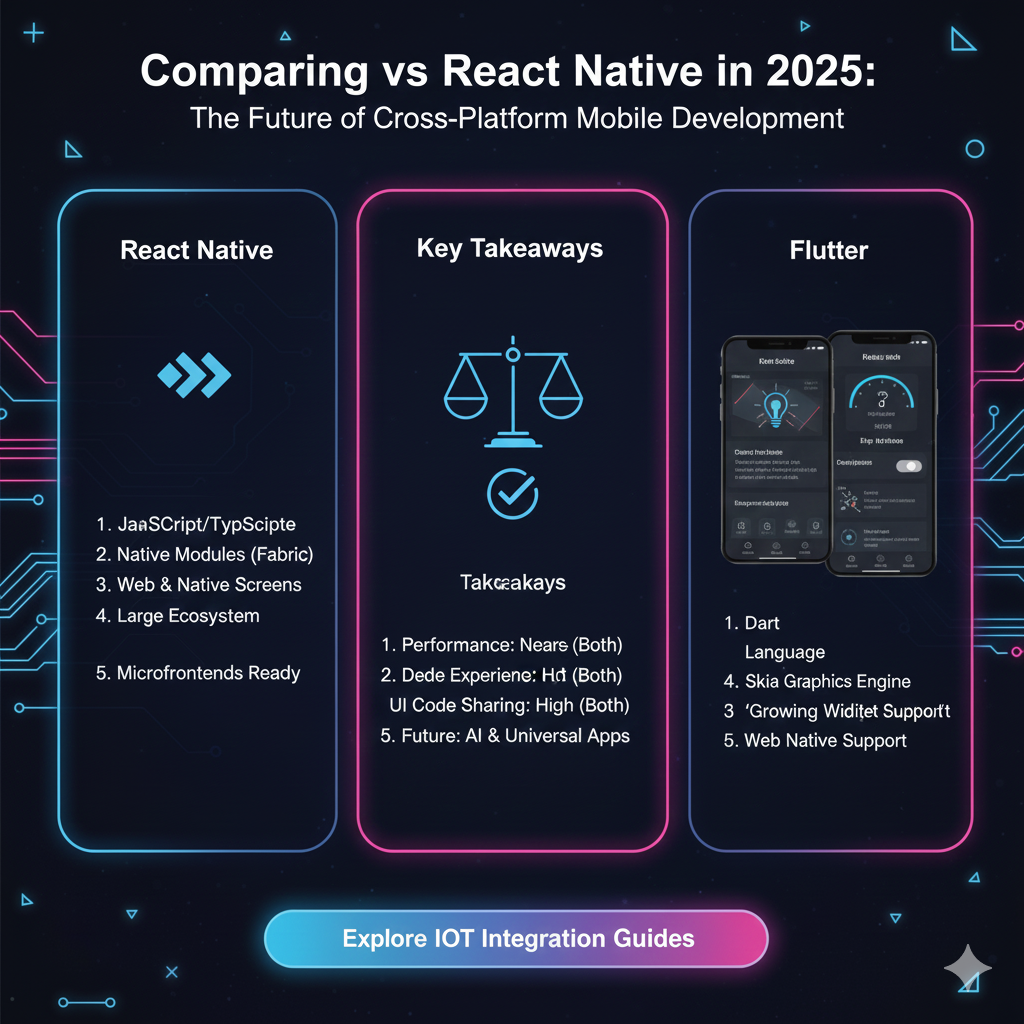
React Native: Born from the halls of Facebook (now Meta), React Native lets you build mobile apps using JavaScript and React. The core idea is "learn once, write anywhere." You use the same fundamental UI building blocks (like <View> and <Text>) that you'd use in a web app, but they get compiled to native components. This means your app feels like a native iOS or Android app.
Flutter: Google's brainchild, Flutter is a different beast altogether. It doesn't use native components. Instead, it uses its own high-performance rendering engine to draw every pixel on the screen. It uses the Dart language, which is compiled directly to native ARM code. Think of it as painting your entire UI from scratch, but with incredible precision and speed.
The 2025 Showdown: Breaking Down the Key Factors
1. Programming Language: JavaScript vs Dart
This is a huge mental shift for developers.
React Native (JavaScript/TypeScript): JS is the lingua franca of the web. If you're coming from a web dev background, the learning curve is practically a speed bump. The ecosystem is massive, with a package for literally everything. In 2025, using TypeScript with React Native is pretty much the standard, saving you from a lot of "undefined is not a function" headaches.
Flutter (Dart): Dart is Flutter's secret sauce. It's a modern, easy-to-learn language that feels familiar if you know Java, C#, or even JavaScript. Its killer feature is Hot Reload, which is arguably even smoother than React Native's, allowing for instant UI updates. While its ecosystem is growing, it's not as vast as npm's.
Verdict: If you have a team of JS/TS wizards, React Native feels like home. If you're starting fresh or love strict, structured languages, Dart is a joy to work with.
2. Performance & Architecture: The Native Bridge vs The Skia Engine
This is where the core philosophical difference plays out.
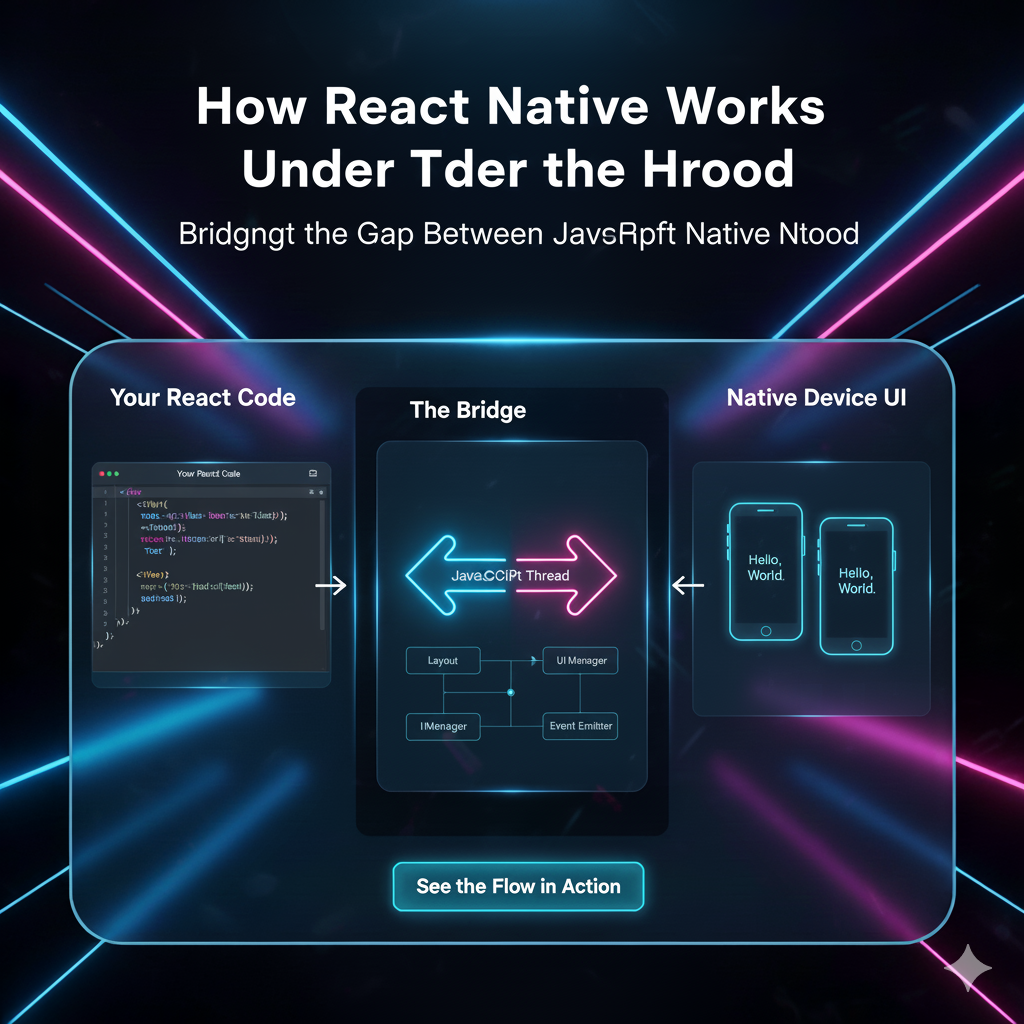
React Native: Uses a "bridge" to communicate between JavaScript and the native (iOS/Android) modules. For most apps, this is perfectly fine. But for animation-heavy apps or those requiring constant, high-volume communication with native features (like 60fps gaming), this bridge can become a performance bottleneck.
Flutter: It compiles directly to native code and uses the Skia graphics engine. There's no bridge for UI components. Flutter talks directly to the platform, which often results in superior, consistent performance, especially for complex animations and UIs. It's often described as "butter smooth."
2025 Update: The React Native team has been working hard on the "New Architecture" (which includes Fabric and TurboModules). This aims to eliminate the bridge bottleneck by allowing for more direct, synchronous communication. While adoption is growing, many legacy libraries and apps are still on the old architecture. Flutter's performance advantage has narrowed but is still noticeable in demanding use cases.
3. UI & Developer Experience: Consistency vs Native Feel
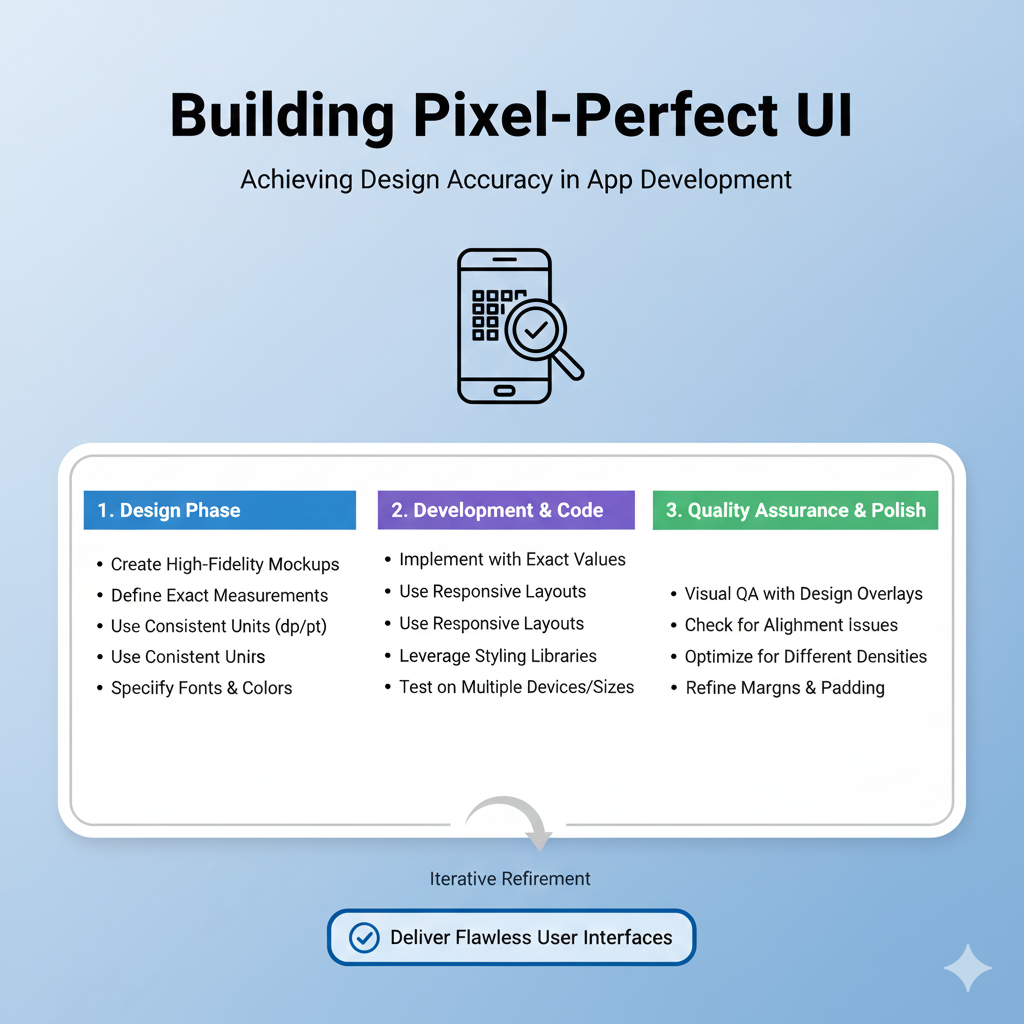
Flutter: It provides a comprehensive set of pre-designed widgets (everything is a widget!) that look and behave exactly the same on every platform. This gives you pixel-perfect control. Your app will look identical on a 3-year-old Android and the latest iPhone. This consistency is a massive win for brand identity and reducing QA time.
React Native: It maps your components to native UI components. A
<Switch>in React Native will look like an iOS switch on an iPhone and an Android switch on an Android phone. This provides a more "native" feel that users are accustomed to. However, this can sometimes lead to inconsistencies—styling that looks great on one platform might need tweaks on the other.
Verdict: Want absolute, no-surprises consistency? Flutter. Prefer an app that blends seamlessly into each OS's design language? React Native.
4. Ecosystem & Community: The Giants' Playground
Both are backed by tech titans and have massive, vibrant communities.
React Native: Has a head start and a colossal npm ecosystem. Finding a library for a specific feature is usually just an
npm installaway. However, the quality can be hit-or-miss, and you need to check for compatibility with the New Architecture.Flutter: Its ecosystem on pub.dev is younger but incredibly well-curated and high-quality. Google's own first-party support for things like Firebase, Ads, and Maps is top-notch. The growth rate of Flutter packages has been explosive.
In 2025, you really can't go wrong with either. Both communities are thriving and incredibly supportive.
Real-World Use Cases: Who's Using What?
Let's look at some big names to see these frameworks in action.
React Native Powerhouses:
Facebook & Instagram: (Obviously) Pushing the framework to its limits.
Shopify: Bet big on React Native for their mobile shopping experience.
Discord: Known for its smooth and feature-rich chat app.
Airbnb: (Note: They famously sunsetted React Native, but their learnings contributed significantly to its maturity. Many of their initial issues have since been resolved.)
Flutter Champions:
Google Pay: A highly secure, performance-critical financial app. This is a huge endorsement.
Alibaba: The world's largest e-commerce platform uses Flutter for a smooth, complex UI.
BMW: Their My BMW app is built with Flutter, proving its capability in high-end, branded experiences.
eBay Motors: Chose Flutter for its consistent UI and fast development cycle.
So, Flutter or React Native? Your 2025 Decision Matrix
Stop overthinking. Ask yourself these questions:
Choose React Native if:
Your team has strong JavaScript/React experience.
You want to leverage a vast web-based ecosystem and share logic with a web app.
You prioritize the native look-and-feel of each platform.
Your app is content-driven (e.g., social media, e-commerce) rather than animation-heavy.
Choose Flutter if:
You prioritize raw performance and smooth animations (e.g., for a gaming UI, a designer's dream app).
You need pixel-perfect UI consistency across all platforms from a single codebase.
You're starting from scratch and aren't tied to the JavaScript ecosystem.
You have plans for Desktop (Windows, macOS, Linux) or Web apps, as Flutter's support for these is more mature and unified.
FAQs: Quick Fire Round
Q1: Is Flutter better than React Native?
A: It's not about "better," it's about "better for you." Flutter often has a performance edge, but React Native has a larger community and leverages a more popular language.
Q2: Can I get a job knowing Flutter/React Native?
A: Absolutely. The demand for skilled cross-platform developers is skyrocketing. Both frameworks feature prominently in job descriptions. Mastering either is a fantastic career move.
Q3: Is React Native dying because of the New Architecture changes?
A: Quite the opposite. The New Architecture is a sign of its evolution and long-term commitment from Meta. It's maturing, not dying.
Q4: How difficult is it to learn Flutter coming from React Native?
A: The concepts are similar, but you'll need to learn Dart and the widget tree mentality. It's a manageable switch that many developers find rewarding.
Conclusion: The Final Word for 2025
So, who's the winner? Honestly, we all are. The competition has pushed both frameworks to become incredible tools.
React Native feels like the safe, powerful bet for teams entrenched in the JavaScript world, valuing native OS integration.
Flutter feels like the ambitious, high-performance challenger that offers unparalleled control and consistency, especially for new projects.
In 2025, you're not making a wrong choice; you're making a strategic one based on your team, your project's needs, and your long-term vision.
Ready to stop debating and start building?
Understanding these frameworks is one thing, but mastering the fundamentals of software development is what will truly make you a great developer. Whether you're leaning towards Flutter's Dart or React Native's JavaScript, a strong foundation is key.
To learn professional software development courses such as Python Programming, Full Stack Development, and MERN Stack, visit and enroll today at codercrafter.in. Our project-based curriculum is designed to take you from beginner to job-ready, giving you the skills to not just choose a framework, but to build amazing things with it.
What's your take? Are you Team Flutter or Team React Native? Let us know in the comments