Firebase Realtime Database: Complete Guide with Examples & Best Practices
Master Firebase Realtime Database with our in-depth guide. Learn real-time data sync, practical examples, security best practices, and when to use it vs. Firestore.
Hey there, fellow devs! 👋 Ever found yourself building an app that needs to update live—like a chat app where messages appear instantly, or a live scoreboard that updates without refreshing? That's where Firebase Realtime Database enters the chat. Forget those clunky, old-school databases that need constant polling. We're talking real-time, seamless data sync that just works. Let's break down everything you need to know about this game-changing tool.
What Exactly is Firebase Realtime Database?
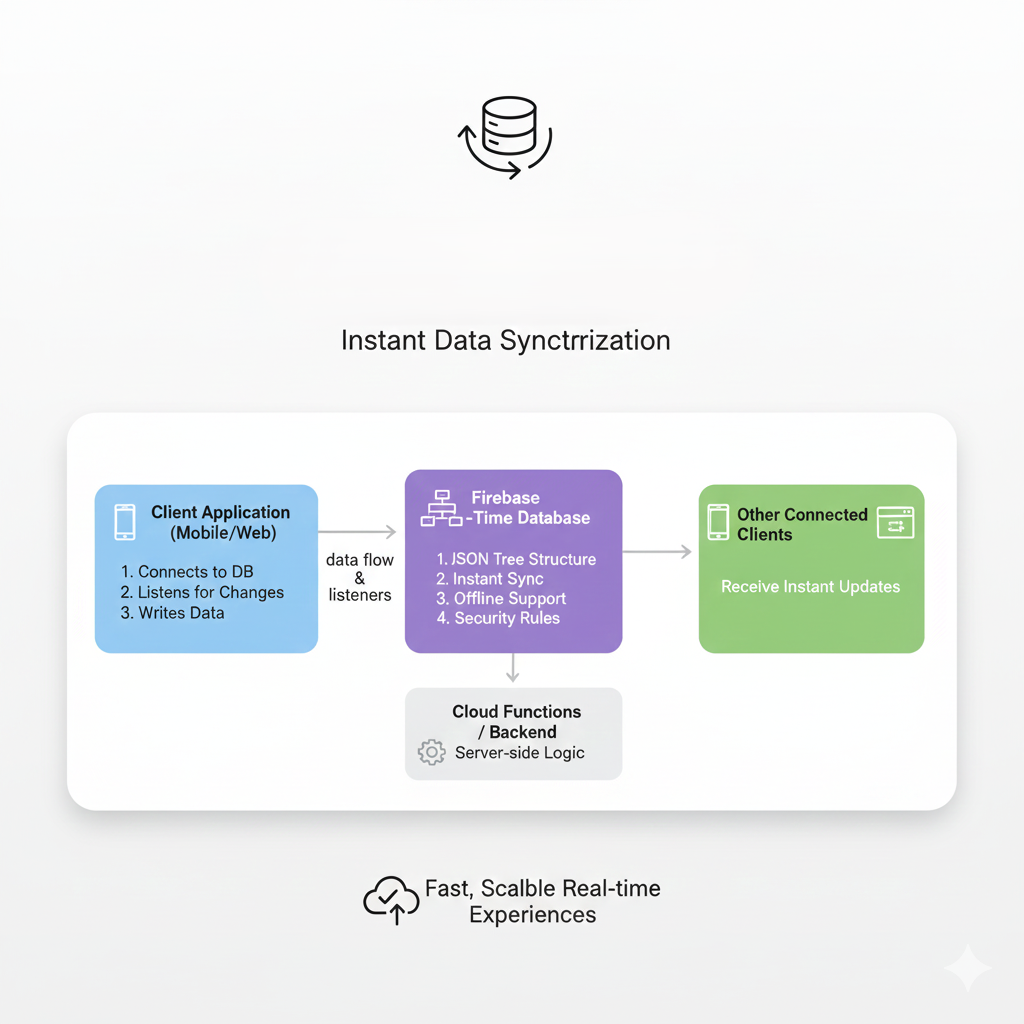
Okay, let's start with the basics. Firebase Realtime Database is a NoSQL cloud database that lets you store and sync data in real-time. No, seriously—real-time. When one user updates data, every connected device sees those changes instantly, usually within milliseconds.
Think of it like a shared Google Doc, but for your app's data. When someone types, everyone sees it live. That's the magic.
It's built on a JSON tree structure—basically a giant, nested JavaScript object living in the cloud. This makes it super flexible but also requires some different thinking compared to traditional SQL databases.
Why Should You Even Care?
Here’s the tea: users today have zero patience. If your app feels slow or doesn't update live, they'll bounce faster than you can say "loading spinner." Realtime features are no longer nice-to-haves; they're expectations.
Plus, Firebase handles the heavy lifting—scaling, security, offline capabilities. You focus on building cool features, not managing servers.
Real-World Use Cases That Actually Matter
Live Chat & Collaboration Apps: WhatsApp, Slack, Google Docs vibes. Messages, cursor positions, edits—all sync instantly.
Gaming Leaderboards & Multiplayer States: Picture a quiz app where scores update live. Pure hype.
Live Tracking Apps: Food delivery tracking, ride-sharing locations, package delivery updates.
IoT Dashboards: Monitoring smart home devices with live sensor data.
Social Media Feeds: Live likes, comments, and new posts appearing without refresh.
Getting Your Hands Dirty: A Practical Example
Let's build a simple live poll app. Imagine "Best Pizza Topping" poll that updates in real-time.
javascript
// Initialize Firebase
import { initializeApp } from 'firebase/app';
import { getDatabase, ref, onValue, update } from 'firebase/database';

const db = getDatabase();
const pollRef = ref(db, 'polls/pizza');

// Listen for real-time updates
onValue(pollRef, (snapshot) => {
  const data = snapshot.val();
  console.log('Pepperoni:', data.pepperoni);
  console.log('Mushrooms:', data.mushrooms);
});

// Cast a vote
function voteFor(topping) {
  const updates = {};
  updates[`polls/pizza/${topping}`] = increment(1);
  update(ref(db), updates);
}
See? No complex setups. Just clean, event-driven code.
The Good, The Bad, and The Scalable
Pros:
Blazing Fast: For real-time features, it's unmatched
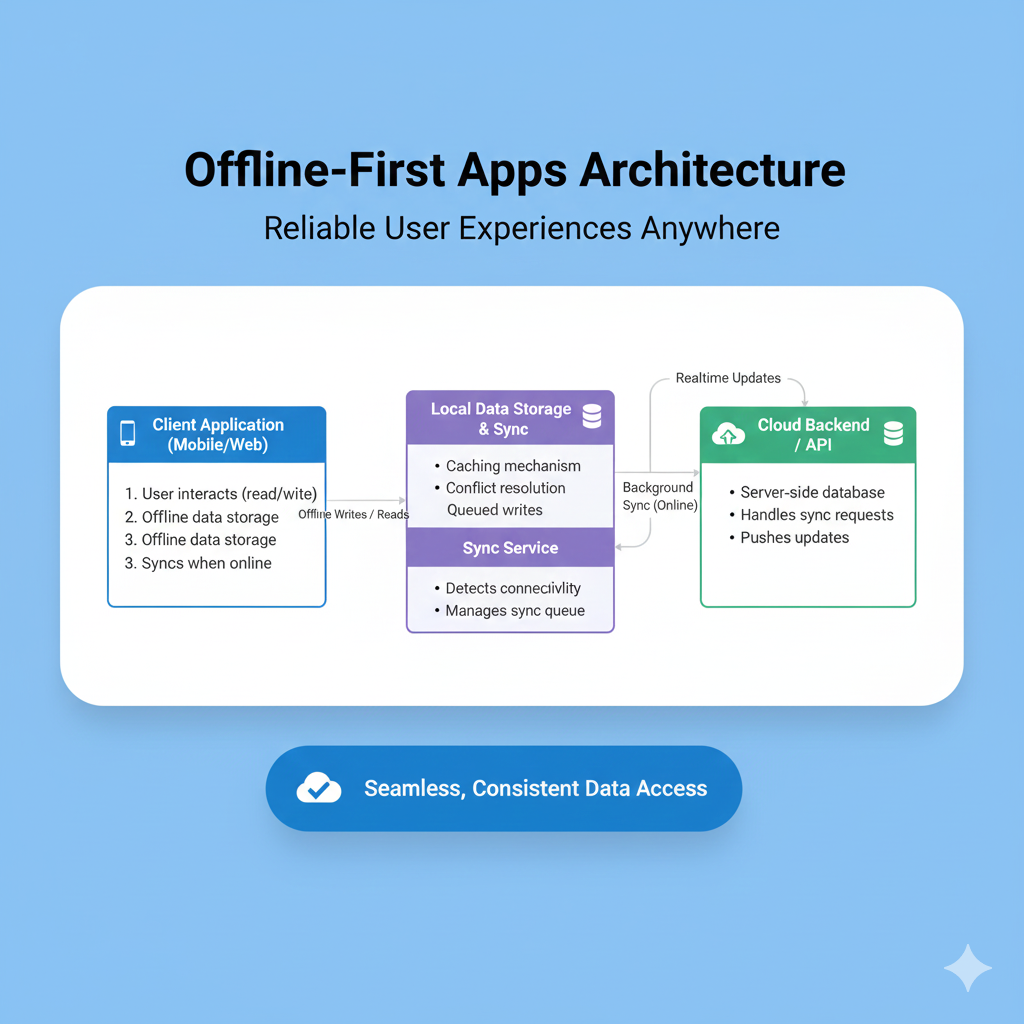
Offline First: Works without internet, syncs when back online
Serverless: No backend code needed for basic operations
Google-Backed: Reliable with great integration into other Google services
Cons:
NoSQL Structure Limitations: Complex queries can be tricky
Scaling Costs: Can get expensive with heavy usage
Data Duplication: Often need to duplicate data for different views
Pro Tips Most Tutorials Won't Tell You
Flatten Your Data Like Your Life Depends On It: Deep nesting will haunt you. Keep structures shallow.
javascript
// ❌ Don't nest too deep
"users": {
  "uid1": {
    "posts": {
      "post1": { ... } // This makes queries painful
    }
  }
}

// ✅ Flatten like pancake
"user-posts": {
  "uid1": {
    "post1": true
  }
},
"posts": {
  "post1": { ... }
}
Security Rules Are Your Bouncers: Never skip these. They control who reads/writes what.
json
{
  "rules": {
    "posts": {
      ".read": true,
      ".write": "auth != null",
      "$postId": {
        ".validate": "newData.hasChildren(['title', 'content'])"
      }
    }
  }
}
Use IndexOn for Performance: Like adding indexes in SQL, but for Realtime Database.
Firebase Realtime Database vs. Firestore: The Eternal Debate
Look, everyone asks this. Here's the real talk:
Choose Realtime Database when:
You need ultra-low latency (gaming, presence systems)
Your data structure is simple and hierarchical
You're building something with frequent, small updates
Choose Firestore when:
You need complex queries with multiple conditions
Your app will scale massively
You want more structured data with collections and documents
Both are great; just pick the right tool for your job.
FAQs: Answering Your Burning Questions
Q: Is it really free?
A: Yes, with generous free tier! But monitor usage as you scale.
Q: How secure is it really?
A: Very—when you properly set security rules. Never leave your database open in production (we've all been there).
Q: Can I migrate to Firestore later?
A: Absolutely. Many apps start with Realtime Database and migrate as they grow.
Q: What about offline capabilities?
A: One of its killer features! Data persists locally and syncs when reconnected.
The Future is Real-Time
Here's the bottom line: users expect live experiences. Whether it's seeing someone typing in a chat or watching a delivery driver approach in real-time, these features separate average apps from exceptional ones.
Firebase Realtime Database gives you that power without the infrastructure headache. It's not perfect for every use case, but for real-time features? It's often the simplest, fastest path to "wow."
Ready to Build the Next Big Thing?
Understanding tools like Firebase Realtime Database is what separates hobbyists from professional developers. The ability to implement complex, real-time features efficiently is a career superpower.
Want to level up your skills for real? To learn professional software development courses such as Python Programming, Full Stack Development, and MERN Stack, visit and enroll today at codercrafter.in. We break down these technologies with hands-on projects that actually prepare you for real development jobs.
Got questions or Firebase war stories? Drop them in the comments below! Let's build something awesome together. 🚀