Master React Native Animations in 2025: A Deep Dive into Reanimated 2 & 3

Unlock 60 FPS animations in React Native. Our 2025 guide covers Reanimated 2 & 3 with real-world examples, performance best practices, and pro tips for smooth, native-feeling interactions.
Let’s be real—nothing makes your app feel more modern and polished than buttery-smooth animations. That subtle bounce when you “like” a post, that satisfying swipe to archive an email, that seamless transition between screens. These details make the difference between an app that’s just functional and one that feels genuinely joyful to use.
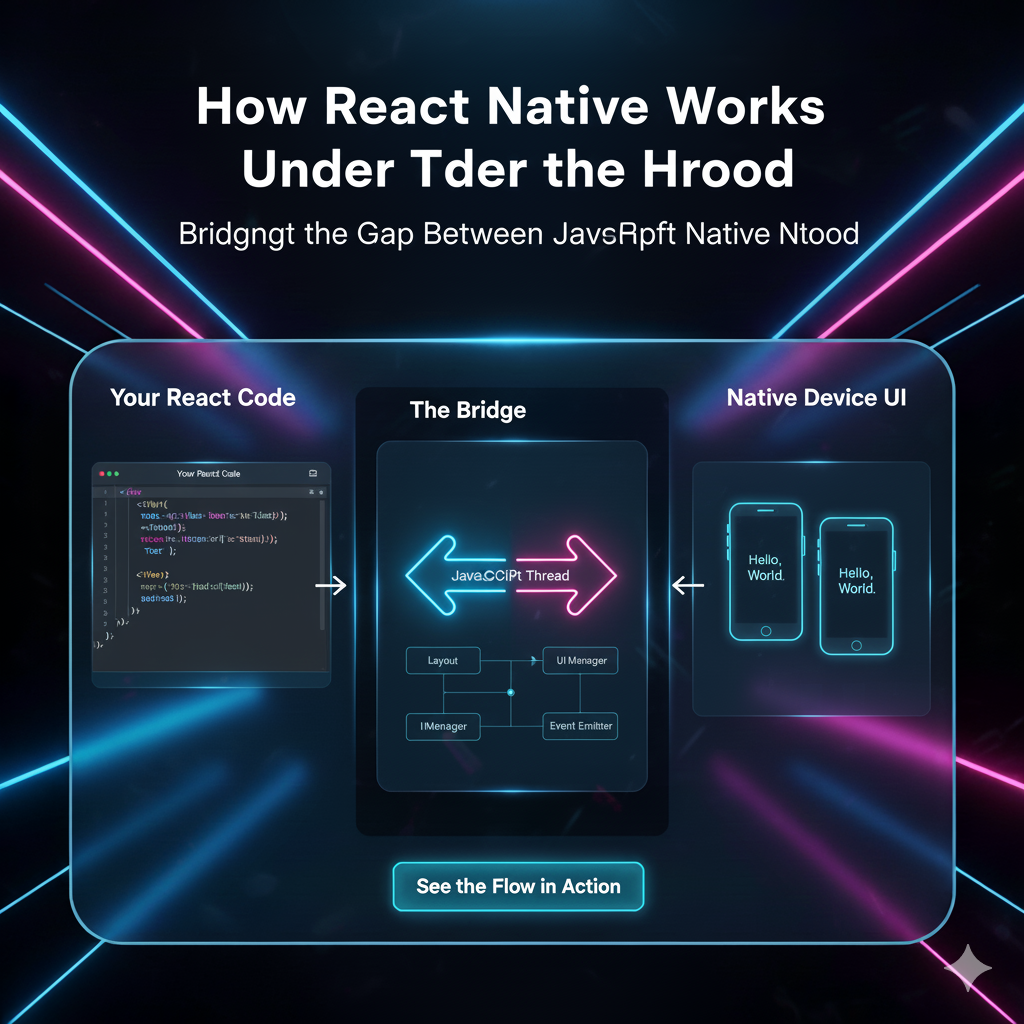
If you've ever struggled with janky, laggy animations in React Native, you're not alone. The default Animated API runs on the JavaScript thread and communicates with the native side over a bridge, which can lead to choppy frames and poor performance, especially on lower-end devices. According to Google, 53% of mobile site visits are abandoned if pages take longer than three seconds to load. Users expect the same fluidity from mobile apps, which is why the right animation tool isn't just a nice-to-have—it's essential for retention.
Enter React Native Reanimated. This library has been a game-changer by running your animations directly on the native UI thread, completely bypassing the JavaScript bottleneck. The result? Consistently smooth, 60+ FPS animations that feel truly native.
This guide will dive deep into Reanimated 2 & 3, breaking down the core concepts, showcasing real-world examples, and giving you the best practices you need to build stellar animations in 2025.
Why Reanimated? The Performance King
You might wonder why you should bother with a third-party library when React Native has its own Animated API. The difference boils down to one word: threading.
Here’s a quick comparison:
Feature | React Native Animated | React Native Reanimated |
|---|---|---|
Thread | Runs on JS thread (can cause jank) | Runs on Native UI thread (smooth) |
Performance | Limited by JS bridge | 60 FPS, no bridge bottleneck |
Declarative Syntax | No | Yes (easier to read & maintain) |
Gesture Support | Basic | Deep integration with Gesture Handler |
In short, Reanimated is the clear winner for complex, high-performance animations. It’s the secret behind the silky-smooth interfaces in apps from companies like Shopify and Expo.
Core Concepts: Speaking the Language of Reanimated
Before you start animating everything in sight, you need to understand a few key building blocks.
1. Worklets: JavaScript on the UI Thread 🏎️
This is the magic sauce. A worklet is a tiny JavaScript function that gets compiled to run directly on the native UI thread. By marking a function with 'worklet', you keep all animation logic on the same thread as the rendering, eliminating communication delays with the JavaScript thread.
javascript
const opacity = useSharedValue(0);

const fadeIn = () => {
  'worklet'; // This marks the function as a worklet
  opacity.value = withTiming(1, { duration: 300 });
};
2. Shared Values: The Single Source of Truth
A Shared Value is a piece of data that can be read and modified from both the JavaScript thread and the UI thread worklets. It’s the primary vehicle for driving your animations.
javascript
const translateX = useSharedValue(0); // Initialize with 03. Animated Styles: Connecting Data to Visuals
The useAnimatedStyle hook is where you define how a Shared Value maps to actual visual styles. It creates a style object that automatically updates when your Shared Values change.
javascript
const animatedStyle = useAnimatedStyle(() => ({
  transform: [{ translateX: translateX.value }],
}));

// Use it in your component
return <Animated.View style={[styles.box, animatedStyle]} />;
4. Animation Helpers: withTiming, withSpring, withDecay
These are your tools for motion. Instead of setting a Shared Value directly, you wrap your target value with one of these helpers to create an animation.
withTiming: Animates to a value over a set duration (e.g., a simple fade-in).withSpring: Creates a physics-based spring animation (perfect for a bouncy button press).withDecay: Starts with an initial velocity and slows to a stop (great for a swipe gesture).
From Simple to Spectacular: Real-World Examples
Let’s look at how these concepts come together in patterns you’ll actually use.
Example 1: Draggable Card with Gestures
Combining Reanimated with React Native Gesture Handler is a powerhouse combo for interactive elements. Here’s a draggable card that springs back to center:
javascript
import { Gesture, GestureDetector } from 'react-native-gesture-handler';
import Animated, { useAnimatedStyle, useSharedValue } from 'react-native-reanimated';

function DraggableCard() {
  const translateX = useSharedValue(0);
  const translateY = useSharedValue(0);

  const gesture = Gesture.Pan()
    .onUpdate((event) => {
      translateX.value = event.translationX;
      translateY.value = event.translationY;
    })
    .onEnd(() => {
      // Spring back to origin on release
      translateX.value = withSpring(0);
      translateY.value = withSpring(0);
    });

  const animatedStyle = useAnimatedStyle(() => ({
    transform: [
      { translateX: translateX.value },
      { translateY: translateY.value }
    ],
  }));

  return (
    <GestureDetector gesture={gesture}>
      <Animated.View style={[styles.card, animatedStyle]} />
    </GestureDetector>
  );
}
Example 2: Animated Accordion (FAQ Section)
This is a classic use case. You can control the height of a content panel smoothly using a derived value.
javascript
function AccordionItem({ isExpanded }) {
  const height = useSharedValue(0);

  const animatedHeight = useDerivedValue(() =>
    withTiming(height.value * Number(isExpanded), { duration: 300 })
  );

  const bodyStyle = useAnimatedStyle(() => ({
    height: animatedHeight.value,
  }));

  return (
    <Animated.View style={bodyStyle}>
      <View onLayout={(e) => { height.value = e.nativeEvent.layout.height; }}>
        {/* Your content here */}
      </View>
    </Animated.View>
  );
}
Pro Tips & Best Practices for 2025
Building animations is one thing; making sure they perform flawlessly is another. Here’s what you need to know.
1. Performance First: What to Do and What to Avoid
✅ Animate Non-Layout Properties: Stick to animating
transform,opacity, orbackgroundColor. These are more performant than layout-affecting properties likewidth,height, ormargin, which require a full layout recalculation on every frame.✅ Memoize Your Callbacks: If you're using
useFrameCallbackor creating gesture objects with React Native Gesture Handler, wrap them inuseCallbackoruseMemo. This prevents unnecessary recreations and reattachments on every render.❌ Don't Read Shared Values on the JS Thread: Avoid reading
sharedValue.valuedirectly inuseEffector regular component logic. This forces a thread synchronization and can block the JS thread. Always read them inside worklets oruseAnimatedStyle.❌ Don't Animate Too Many Components: While Reanimated is powerful, animating hundreds of components at once can impact performance. As a general rule, try to stay under 100 simultaneous animations on low-end Android devices.
2. Smooth Scrolling is King
A common issue with the New Architecture in React Native is flickering or jittering animated components (like sticky headers) inside a ScrollView. The fix? Make sure you're on React Native 0.81+ and Reanimated 4.2.0+, and enable the necessary performance feature flags as described in the official docs.
3. The Debug vs. Release Divide
Always test performance in release mode. Debug builds lack compiler optimizations, so animations will feel slower. What looks janky in development might be perfectly smooth in production.
4. Embrace the Ecosystem
Reanimated is the core, but other libraries excel in specific areas:
For Complex Vector Animations: Use Lottie to import animations directly from After Effects.
For Custom Drawing & Complex Visuals: Use React Native Skia for GPU-accelerated charts, graphs, and custom drawings.
For Simpler Declarative Syntax: Moti provides a Reanimated-powered API that's easier to learn, inspired by Framer Motion.
To learn professional software development courses such as Python Programming, Full Stack Development, and MERN Stack, visit and enroll today at codercrafter.in. These skills will give you the foundational knowledge to implement advanced tools like Reanimated in real-world projects.
FAQs: Quickfire Questions Answered
Q: Reanimated 2 vs. 3 – Should I upgrade?
A: Absolutely. Reanimated 3 introduced powerful new features like Shared Element Transitions for smooth screen-to-screen animations. The good news? There are no breaking API changes between 2.x and 3.x, so your existing code should just work. Note that support for older versions is ending, so upgrading is key for staying current.
Q: My animations are flickering on scroll. Help!
A: This is a known issue with the New Architecture. The solution is to upgrade your React Native and Reanimated versions and enable specific static feature flags (preventShadowTreeCommitExhaustion, DISABLE_COMMIT_PAUSING_MECHANISM). Detailed steps are in the official performance guide.
Q: Can I animate text smoothly?
A: Yes, but don't use a re-rendering <Text> component with React state for a counter. Instead, use an animated TextInput component that displays a shared value. This method is far more performant.
The Bottom Line
In 2025, user expectations for mobile app quality are higher than ever. Smooth, responsive animations are no longer a luxury—they're a baseline requirement. React Native Reanimated gives you the power to meet that standard by providing a declarative way to build truly native-performance animations.
Start by mastering the core concepts: Shared Values, Worklets, and Animated Styles. Then, combine them with Gesture Handler for immersive interactions. Always keep performance best practices in mind, and don't be afraid to leverage complementary libraries like Lottie or Skia for specific tasks.
The learning curve is worth it. By investing in Reanimated, you're investing in an app experience that feels polished, professional, and delightful to use—an experience that keeps users coming back.