AI Fundamentals Explained: A Beginner’s Guide(Easy & Practical)
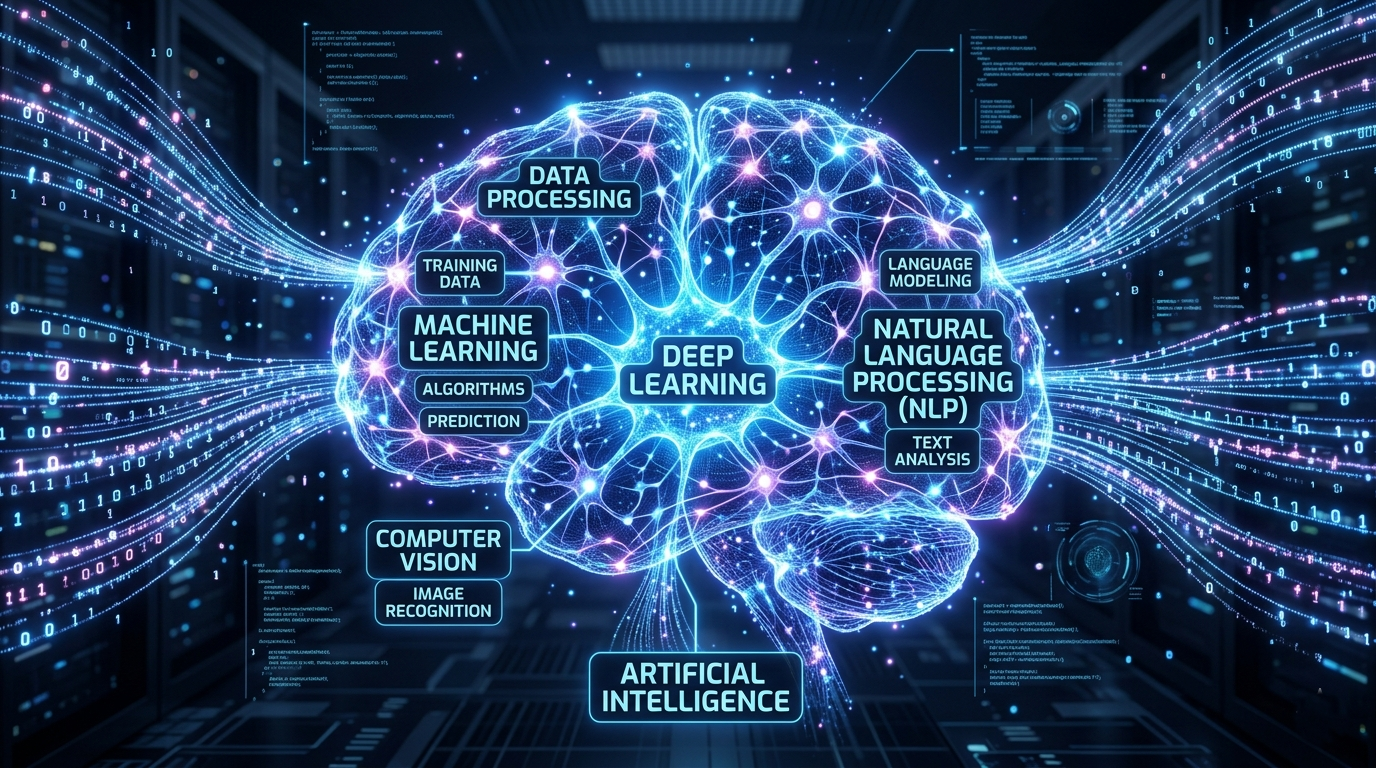
Learn AI fundamentals explained simply with real examples, tips, and FAQs – perfect for beginners who want clarity without complexity.
Imagine explaining AI to a curious friend who’s heard the word everywhere — from TikTok to tech talks — but has no clue what it actually means. That’s exactly what this guide does. We’ll break down AI fundamentals explained in a way that’s friendly, clear, and surprisingly fun to read.
You don’t need technical degrees or confusing jargon — just curiosity. By the end, you’ll understand what AI really is, how it works in everyday life, and why it’s becoming such a big deal.
What Are AI Fundamentals?
Simply put, AI fundamentals are the basic ideas and building blocks that explain what Artificial Intelligence is and how it works. These include:
What AI means
How machines “learn”
The tools and terms used in AI
Real-world examples you see every day
Think of it like learning the ABCs of machines that can think or act intelligently — the way humans do in simple tasks.
What Is AI? (Plain English)
At its core, Artificial Intelligence (AI) is any computer system that can perform tasks that normally require human intelligence. This includes:
Understanding language
Recognizing images
Making decisions
Predicting patterns
Solving problems
Real‑life example:
When Netflix suggests shows you might like, that’s AI — based on patterns in your viewing. When your phone predicts the next word you’ll type, that’s AI too.
Core Components of AI Fundamentals.
1. Machine Learning (ML)
Machine Learning is where computers learn from data, without being explicitly programmed for every situation.
Example: Teaching a computer to tell apart cat vs. dog photos by feeding it thousands of tagged images.
What happens? The system spots patterns — just like you would after seeing many pics — and learns how to predict the right answer.
2. Algorithms
An algorithm is like a recipe — a set of steps a machine follows to solve a problem.
Example: Sorting your playlist by most played songs first.
Without algorithms, computers would be lost! They are the backbone of how AI makes decisions.
3. Neural Networks
Inspired by the human brain, neural networks are a set of nodes (like tiny connected thinking units) that process information.
Example: Neural networks help AI recognize handwriting, faces, and even emotional tone in text.
4. Natural Language Processing (NLP)
NLP lets machines understand and speak human language.
Example: When ChatGPT replies in English or translates text — that’s NLP at work.
NLP makes AI capable of communication that feels natural.
How AI Works (Step‑by‑Step)
Let’s picture a simple task: teaching a computer to recognize apples vs. oranges.
Collect data: Thousands of apple and orange pictures
Label them: Tag each image correctly
Train model: Machine finds patterns (color, shape)
Test: See if the AI can now tell apples apart from oranges
Improve: More data makes the model smarter
That’s AI learning in action — without someone writing rules for every case.
AI Fundamentals in Everyday Life
You interact with AI more than you think! Here are some examples:
Mobile cameras that auto‑adjust focus
Search engines predicting your query
Spam filters cleaning your inbox
Voice assistants like Siri and Alexa
Product recommendations on Amazon
These are all AI systems learning from patterns and giving you smarter results.
Why Learn AI Fundamentals?
Even if you’re not becoming a developer, knowing AI basics helps you:
Understand news about AI breakthroughs
Spot ethical issues and biases
Use AI tools more wisely
Prepare for future careers influenced by AI
As companies and tech evolve, AI literacy becomes a core life skill — like knowing how to search or use spreadsheets today.
FAQs – AI Fundamentals Explained
Q1: What’s the difference between AI and Machine Learning?
A: AI is the big idea of machines doing intelligent tasks. Machine Learning is one method (most common) that lets AI learn from data.
Q2: Do I need coding to understand AI fundamentals?
A: No! Concepts can be understood with everyday examples before diving into code.
Q3: What is the simplest part of AI I should start with?
A: Start with what AI does — pattern recognition, recommendations, and language understanding.
Q4: Is AI the same as human intelligence?
A: No. Today’s AI is good at narrow tasks — like recognizing faces or writing text — but doesn’t think like humans do.
Q5: How long does it take to learn AI basics?
A: With structured learning and practice, you can understand basics within weeks — it depends on your pace and goals.
Conclusion – Your Next Steps in AI
Now that you’ve got a solid grasp on AI fundamentals explained simply, it’s time to apply what you’ve learned:
👉 Explore real tools (like ChatGPT)
👉 Try a free AI fundamentals course
👉 Build small hands‑on projects
AI isn’t just future technology — it’s today’s reality. And by understanding the basics first, you’re setting yourself up for success in a world driven by intelligence — human and artificial.
Ready to go deeper? Start with a mini project: build a simple prediction model or explore AI apps you use daily — and notice how AI touches everything around you.